Published:
2026-06-16
This article examines machining applications, industry needs and recurring difficulties using reported 2026 research. It presents Wuhan Kaiming Gaoxin metal repair options as practical references for cost control and component service life.Pending confirmation
Contents
The basic definition of machining
Machining applications in heavy equipment manufacturing
Typical machining applications in wind power equipment
Machining applications in vehicle manufacturing
Repair options for common wear in machined components
Practical ways to extend machined component service life
New industry trends in machining applications in 2026Pending confirmation
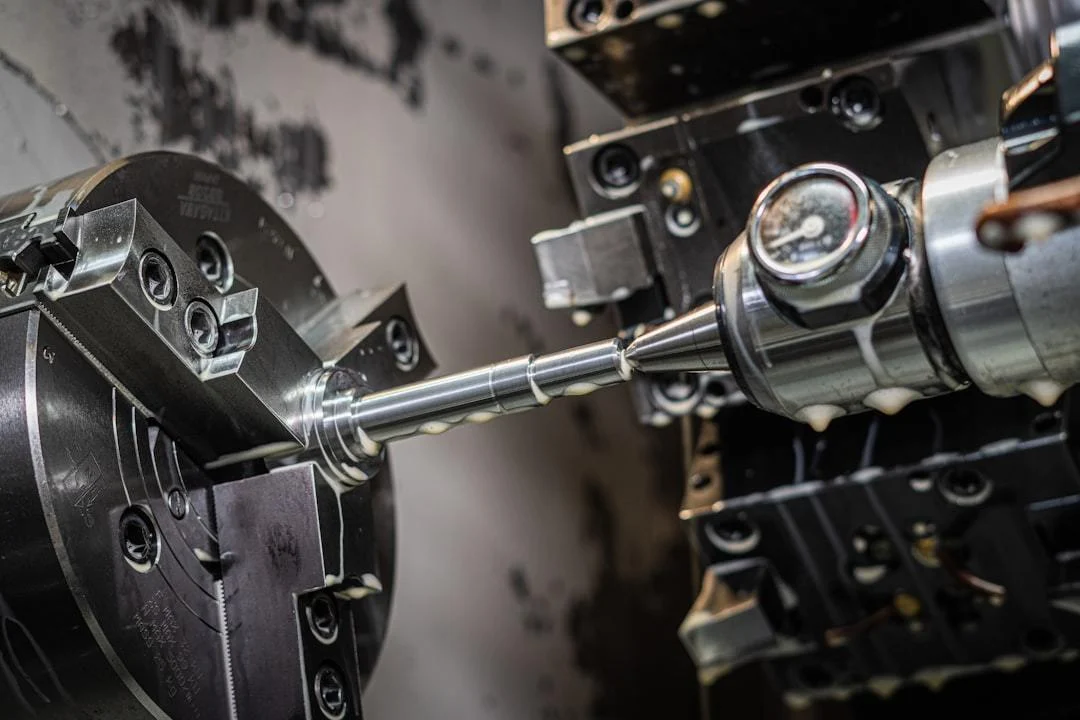
Machining changes a workpiece's dimensions, geometry or properties through processes such as mechanical cutting.
Machining is used throughout manufacturing, with different accuracy, consumable and maintenance requirements. Returning every worn component for factory remachining can increase costs. The source describes Wuhan Kaiming Gaoxin Technology Co., Ltd. as having more than 10 years of surface repair experience, serving over a thousand manufacturers and developing methods for varied applications.Pending confirmation
Machining applications in heavy equipment manufacturing
Heavy equipment manufacture relies on precision machining of major mining, smelting and transport components. Such work typically involves large, heavy parts with tight accuracy requirements.
Machining requirements for heavy mining equipment components
Mining equipment operates under dust and impact loads. The source states machining requirements of IT7 or better and roughness within Ra1.6 for hydraulic support columns and cutting drum shafts. Conventional removal and factory remachining of local wear can cause substantial downtime.Pending confirmation
Custom machining requirements for large metallurgical rollers and shafts
Conveyor and support rolls in metallurgy can weigh several tonnes. Machining requires control of radial runout; extended high-temperature use can cause pitting and wear that affect sheet accuracy. The source notes that reserve roll components create continuing inventory costs for many steel companies.
Typical machining applications in wind power equipment
Machining is essential in wind power equipment manufacture. Unattended outdoor service makes component accuracy important to machine life and generation efficiency. The source describes growing 2026 wind installations and corresponding machining maintenance needs.Pending confirmation
Precision machining process standards for wind turbine main shafts
Wind turbine main shafts transmit torque. Machining must meet geometric tolerances and dynamic balancing requirements to avoid vibration. The source specifies flange bolt position errors within 0.02mm and additional anti-corrosion coatings for offshore shafts.Pending confirmation
Challenges in batch machining wind turbine tower connectors
Wind tower flanges and bolted connectors are batch-machined, with some orders numbering thousands. Dimensional errors can create significant scrap; the source describes demand for lower-cost correction methods among smaller suppliers.
Image Source:
unsplash
Machining applications in vehicle manufacturing
Machining in automotive manufacturing covers powertrain components and body structures. The source article states that new energy vehicle growth in 2026 creates additional demands for accuracy, efficiency and lightweight construction.Pending confirmation
Precision machining requirements for new energy vehicle chassis components
New energy vehicle chassis are highly integrated. Precision machining prepares mounting surfaces on integrated die-cast blanks. The source claims tolerance requirements more than 30% tighter than conventional vehicles and notes the effect of surface flatness on vehicle stability.Pending confirmation
Precision control for machining critical engine components
Crankshafts, camshafts and cylinder blocks in conventional and range-extender engines require multiple machining steps. Accuracy affects energy consumption and life. The source states a service life expectation above 100,000km for these components.Pending confirmation
Repair options for common wear in machined components
Machined parts can develop wear, scratches and dimensional errors in service. Replacing them may cost several times more than repair. Surface repair can retain the basic structure while restoring machining accuracy.
Degrease, descale and roughen the worn machined surface to achieve the required bond strength between the repair material and substrate.
The source describes filling and cladding with a metal repair material without thermal distortion, keeping the workpiece below 70°C throughout the repair.Pending confirmation
Local secondary finishing restores the accuracy specified in the original drawing without returning the whole component to a factory.
| Comparison criteria | Conventional factory-return machining | Kaiming Gaoxin in-situ repair solutions |
|---|---|---|
| Construction time | 7-15 daysPending confirmation | 2-48 hoursPending confirmation |
| Total cost | 60%-80% of the cost of a new componentPending confirmation | 20%-40% of the cost of a new componentPending confirmation |
| Workpiece deformation rate | Approximately 15%Pending confirmation | Less than 0.1%Pending confirmation |
| Feasibility of on-site work | Low | Supports in-situ work without dismantling equipment |
Repairing machining surface wear without additional machining
The source states that routine journal and bearing seat wear can be repaired in-situ without sending the part to a machining workshop, and claims production can resume two hours after completion with minimal additional downtime.Pending confirmation
Lower-cost correction of dimensional errors in machined parts
The source describes rapid correction of oversized bores and undersized shafts using a non-metal welding-type repair process at lower cost than scrapping and remachining, and reports use in several domestic automotive parts production bases.Pending confirmation
Practical ways to extend machined component service life
The service life of a machined component depends on more than its substrate. Suitable post-treatment and routine maintenance can extend use and reduce production and maintenance costs.
Surface strengthening after machining
The source describes tungsten carbide coatings and high-frequency hardening after machining, claiming 2-3 times greater surface wear resistance and component replacement frequency reduced by more than 60% in some heavy-industry applications.Pending confirmation
Predicting wear during routine machining maintenance
The source recommends a regular component inspection register, measuring wear on key parts every 1-2 months and arranging repair before wear reaches 0.5mm to prevent larger damage from disrupting production.Pending confirmation
New industry trends in machining applications in 2026Pending confirmation
The source describes machining in 2026 as moving towards greater precision, lower wear and flexible production. Green and low-carbon policies encourage material efficiency, while metal repair processes are becoming more widely used.Pending confirmation
Applications of digital flexible machining
More small and medium manufacturers are introducing flexible digital machining lines in 2026, adapting to different workpiece sizes without replacing many fixtures and reportedly improving efficiency by over 40%.Pending confirmation
Applications of green, lower-energy machining policy
The source article states that China's green-manufacturing assessment includes machining material utilisation and that extending component life through restoration can help meet an 85% utilisation requirement.Pending confirmation
Common questions
Q: Must a lightly worn machined part be sent back to a factory?
A: Not necessarily. Minor wear may be restored on site without disassembly or factory return, meeting the original machining requirements at a much lower cost than remachining.
Q: Which industries have the highest demand for restoring machined parts?
A: The source article states that heavy industry, wind power and metallurgy account for over 65% of large machined-part restoration demand in 2026, offering substantial cost and efficiency opportunities.Pending confirmation
Q: Can restored workpieces meet new-machining precision standards?
A: The source article states that advanced metal restoration can meet the original machining drawing requirements and may provide a service life exceeding that of a new workpiece.
The source describes machining as a core manufacturing process with a complete supporting service chain in 2026. Combining machining with metal surface repair is presented as an approach to reducing costs and improving efficiency. Further technical information is available at www.whkmgx.com.Pending confirmation
This article was generated by AI and is provided for reference only.
Original page index and navigation text
A nationwide quality initiative: understanding markets, sharing technology and managing quality
News centre
Home
Company news
Industry news
2026 Machining Applications Across Industries: Supporting Metal Restoration, Cost and EfficiencyPending confirmation
Previous page
2026 Machining Precautions: Practical Guidance on Cost, Quality and Fault PreventionPending confirmation
2026 Machining Industry Updates: Technology Upgrades, Cost Reduction and Efficiency for ManufacturersPending confirmation
Next page
Previous page:
2026 Machining Precautions: Practical Guidance on Cost, Quality and Fault PreventionPending confirmation
Next page:
2026 Machining Industry Updates: Technology Upgrades, Cost Reduction and Efficiency for ManufacturersPending confirmation
Related news
2026 Machining Products: Professional Metal Surface Restoration Solutions from Wuhan KaimingPending confirmation
2026-08-15
2026 Machining Principles: Technical Knowledge for Industrial Metal Surface RestorationPending confirmation
2026-07-31
2026 Machining FAQs: Process Faults and Practical Efficiency ImprovementsPending confirmation
2026-07-16
2026 Machining Precautions: Practical Guidance on Cost, Quality and Fault PreventionPending confirmation
2026-07-01
2026 Machining Applications Across Industries: Supporting Metal Restoration, Cost and EfficiencyPending confirmation
2026-06-16
2026 Machining Industry Updates: Technology Upgrades, Cost Reduction and Efficiency for ManufacturersPending confirmation
2026-06-01
Share
Back to list