Published:
2026-07-16
This article discusses common machining questions in 2026, including definitions, accuracy troubleshooting, wear treatment and process improvements, with reported measurements and implementation steps.Pending confirmation
Content overview
The source article compiles the 30 most frequently raised machining questions in 2026 and offers practical guidance based on reported industry measurements.Pending confirmation
Machining fundamentals and the reported 2026 industry overviewPending confirmation
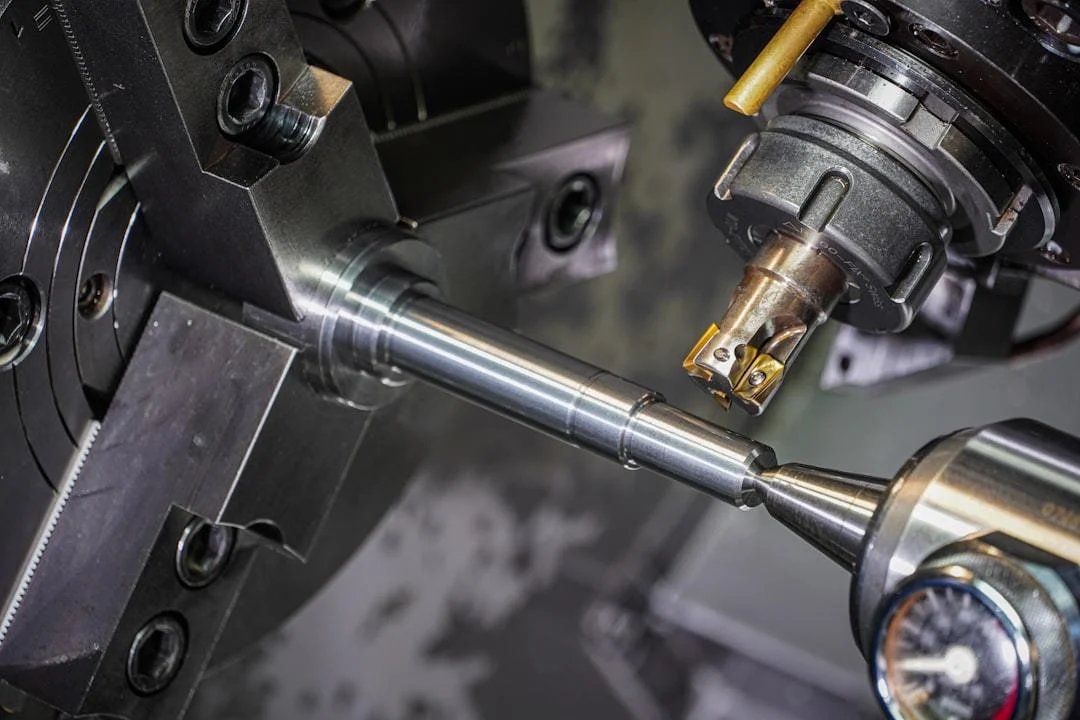
Machining changes a workpiece's dimensions, geometry or properties through processes such as cutting and deformation.
It is a foundation of the equipment manufacturing supply chain. The source describes domestic machining in 2026 as moving towards greater precision, lower wear and intelligent manufacturing.Pending confirmation
Main applications of machining
Machining applications extend from heavy equipment to precision electronics, new energy vehicle structures and aerospace components. Accuracy and efficiency requirements vary; processes must match actual needs.
Core machining industry trends in 2026Pending confirmation
The source cites 2026 research stating that more than 62% of smaller machining businesses have tried metal surface repair to extend equipment life and reduce operating costs, with market adoption 37% higher than three years earlier.Pending confirmation
Common machining accuracy problems and troubleshooting
Accuracy deviations are common in machining. Standard troubleshooting can often identify the cause without immediately replacing equipment or cutting tools.
Main causes of workpiece dimensional errors after machining
The source reports that more than 80% of dimensional errors in collected 2026 cases relate to guideway clearance wear, unsuitable feed parameters or inadequate clamping. Operators can check these factors in priority order.Pending confirmation
Addressing inadequate surface roughness in machined parts
For inadequate surface roughness, first check tool wear and coolant supply. Adjust spindle speed and feed as appropriate; higher-grade equipment is not always necessary.
Common equipment wear problems and repair options
Wear in production equipment affects efficiency and finished part yield. Appropriate repair methods can extend equipment service life and reduce overall investment.
Efficient repair of worn machine guideways
Replacing worn guideways can be expensive. The source describes in-situ metal surface repair to reinforce and harden worn areas without equipment dismantling and claims restored precision comparable to new equipment. It directs readers to www.whkmgx.com for technical details.
Preventing abnormal tool wear in daily operation
Track tool wear and establish warning thresholds for the machining parameters of different materials. Replace tools near the warning limit to prevent unexpected breakage from damaging workpieces or machine tables.
Practical guidance for common machining workflow problems
Follow standardised steps for machining workflow improvements to avoid disrupting production through arbitrary parameter changes:
Review three months of machined component production data and identify recurring fault types.Pending confirmation
Test different adjustments against each of the three most frequent fault types.Pending confirmation
Incorporate validated adjustments into workshop procedures and train front-line operators.
Review optimisation results every two weeks and adjust operating procedures.
The source article reports that standardised procedures tested at several machining businesses lowered defect rates by about 15% on average.Pending confirmation
Image Source:
unsplash
Balancing efficiency and cost in small-batch machining
For small custom machining batches, standard fixtures and modular machining programmes can reduce changeover time and balance efficiency with operating costs.
Machining precautions for special materials
For stainless steel, high-temperature alloys and other special materials, select suitable tools and coolant and calculate feed limits in advance to reduce deformation and tool breakage.
Reported 2026 comparison of machining process optionsPending confirmation
A 2026 third-party industry survey is described as comparing three common supporting machining processes; the table below provides the source article's results for selection reference.Pending confirmation
| Comparison criteria | Direct component replacement | Supporting metal surface repair solutions | Complete equipment upgrade and retrofit solutions |
|---|---|---|---|
| Machining lead time | 7-15 daysPending confirmation | 2-3 daysPending confirmation | 30-45 daysPending confirmation |
| Duration of accuracy retention | 1-2 yearsPending confirmation | 3-5 yearsPending confirmation | 5-8 yearsPending confirmation |
| Single-piece machining cost as a proportion | 100%Pending confirmation | 30%-40%Pending confirmation | 200%-300%Pending confirmation |
| Applications | Completely damaged component | Wear beyond dimensional limits | Complete production-line upgrade |
The article describes combining metal surface restoration with routine machining maintenance as a cost-effective route for small and medium businesses.
Key criteria for small and medium machining businesses selecting processes
Prioritise return on investment when selecting a process. Avoid expensive upgrades merely because others adopt them; match technology to long-term order requirements.
Practical methods for verifying process adjustments
After adjusting a machining process, the source recommends testing at least 100 workpieces across three consecutive batches and reviewing average parameters before wider implementation.Pending confirmation
Avoiding common mistakes when upgrading machining processes
The source article warns that misconceptions during process upgrades in 2026 can add unnecessary costs and should be identified in advance.Pending confirmation
Is pursuing higher accuracy actually necessary?
Conventional machine tools can meet the precision requirements of many industrial parts. Unnecessary investment in higher-precision equipment can increase unit costs and reduce competitiveness.
Key criteria for upgrading ageing machining equipment
If the core structure has no irreversible damage, surface repair and partial component replacement may restore machining accuracy without replacing the entire ageing machine.
Common questions
Q: How often should routine machining maintenance be performed?
A: The source article recommends routine maintenance every 72 operating hours under normal conditions and every 48 hours in heavy-load production to identify emerging problems.Pending confirmation
Q: Can lightly worn machined workpieces be restored?
A: Most lightly worn machined workpieces can be restored; the source article describes cost as about 30% of replacement production, with higher efficiency.Pending confirmation
Q: How can defects be controlled in small machining batches?
A: Inspect the first piece across all dimensions before batch production; the source article recommends checking dimensions once every 10 pieces to control defects.Pending confirmation
Q: Where does machining industry profitability mainly come from in 2026?Pending confirmation
A: The source article describes the mainstream approach as specialising in defined workpiece segments while using equipment restoration to lower operating costs and improve competitiveness.
Machining is a foundation of equipment manufacturing. Prevention, appropriate maintenance and suitable repair methods support stable long-term production.
This article was generated by AI and is provided for reference only.
Original page index and navigation text
A nationwide quality initiative: understanding markets, sharing technology and managing quality
News centre
Home
Company news
Industry news
2026 Machining FAQs: Process Faults and Practical Efficiency ImprovementsPending confirmation
Previous page
2026 Machining Principles: Technical Knowledge for Industrial Metal Surface RestorationPending confirmation
2026 Machining Precautions: Practical Guidance on Cost, Quality and Fault PreventionPending confirmation
Next page
Previous page:
2026 Machining Principles: Technical Knowledge for Industrial Metal Surface RestorationPending confirmation
Next page:
2026 Machining Precautions: Practical Guidance on Cost, Quality and Fault PreventionPending confirmation
Related news
2026 Machining Products: Professional Metal Surface Restoration Solutions from Wuhan KaimingPending confirmation
2026-08-15
2026 Machining Principles: Technical Knowledge for Industrial Metal Surface RestorationPending confirmation
2026-07-31
2026 Machining FAQs: Process Faults and Practical Efficiency ImprovementsPending confirmation
2026-07-16
2026 Machining Precautions: Practical Guidance on Cost, Quality and Fault PreventionPending confirmation
2026-07-01
2026 Machining Applications Across Industries: Supporting Metal Restoration, Cost and EfficiencyPending confirmation
2026-06-16
2026 Machining Industry Updates: Technology Upgrades, Cost Reduction and Efficiency for ManufacturersPending confirmation
2026-06-01
Share
Back to list